 EN
EN RU
RU ID
ID 中文
中文Ubud, ceremonies and practice: what matters
In short. The spiritual side of Bali is above all Ubud and the villages around it: that is where most temples, yoga studios and retreats are, and life runs slower than in the south. People come there for weeks at a time for practice rather than for sightseeing.
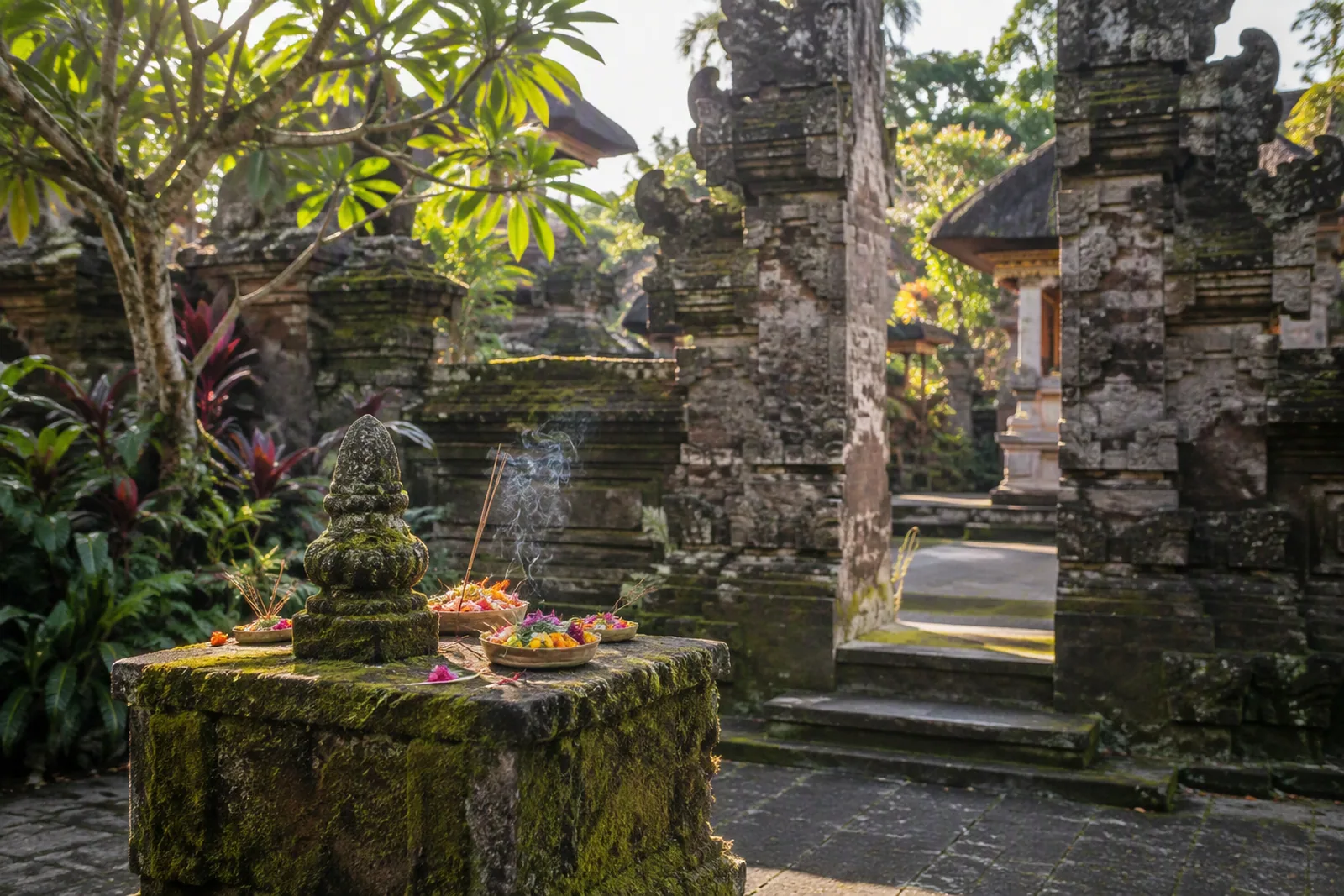
Ceremonies and temples
A temple in Bali is not an attraction but a working place of prayer. Inside you wear a sarong below the knee and covered shoulders, a sash is added on the grounds, and shoes come off where you are asked. During a ceremony the visitor's place is the outer courtyard: walking into the middle and inner courtyards is not allowed, even when it seems that nobody objects. Photographing people at prayer without their consent is not appropriate: it is a request about respect, not formality. If you happen upon a festival, stay to the side, keep the way clear and do not take seats meant for local families.
Practice
Ubud is home to hatha and vinyasa yoga, sound baths, meditation and breathwork; retreats usually include accommodation, meals and a full-day schedule. A retreat differs from an ordinary holiday in exactly that schedule: you practise morning and evening, and there is less free time than you expect.
How to choose a villa for that rhythm
- Count travel time, not distance to the studio: in Ubud ten minutes on a map can become thirty in traffic.
- Quiet in the morning matters more than the view: check that there is no building site and no road next to you.
- If practice takes part of the day, a villa with a separate space for it works better than a shared living room.
- Ask who cleans and cooks: with a daily schedule that frees up hours.
We do not publish prices for retreats and classes: they are confirmed at the studio itself and change with the season.
Villa catalog with current prices: Canggu, Seminyak, Ubud and other areas.
Browse catalogMessage us on Telegram